

By Gurudev Shri Amritji
To re-train your brain, it helps to understand the human limbic system, a network of interconnected brain structures involved in emotional processing, memory, motivation, and instinctive survival responses. It assigns emotional meaning to experiences, detects potential threats, and supports behaviors that help protect survival.
The limbic system does not function in isolation. It is in continuous communication with the rest of the body through the autonomic nervous system, which includes the sympathetic and parasympathetic branches. This largely involuntary system regulates respiration, circulation, digestion, elimination, and countless restorative functions without requiring conscious effort. The brain and body are constantly working together to maintain balance, adapt to changing circumstances, and support healing and regeneration. This is part of the innate intelligence of the human organism.
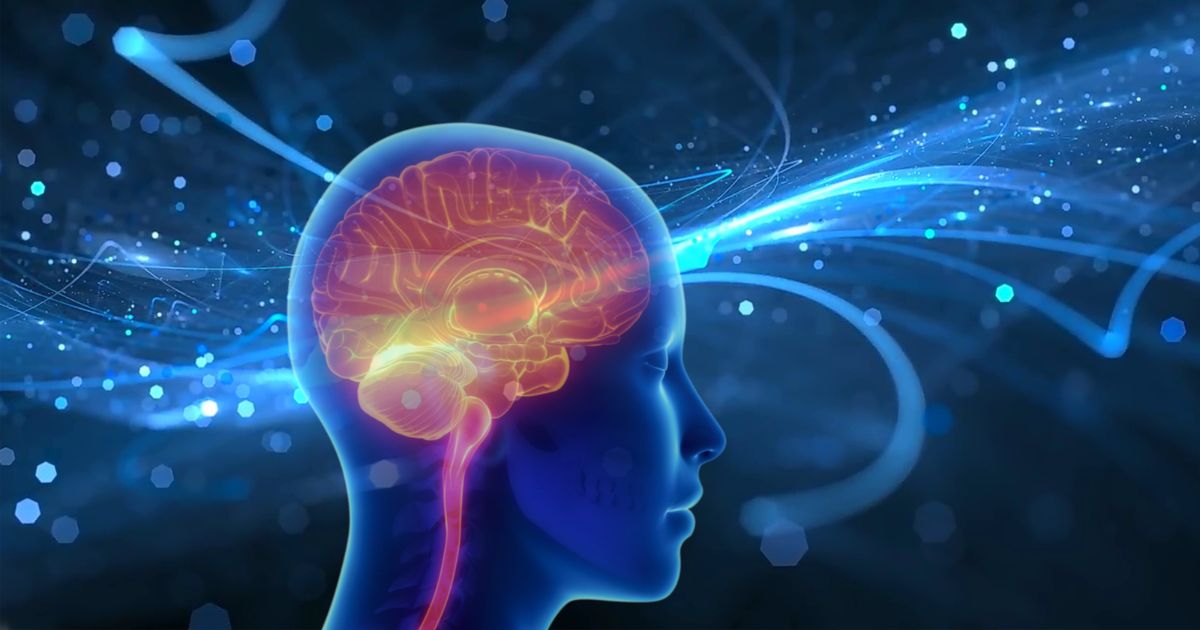
In yogic teachings, these complementary physiological functions are understood through the symbolic language of polarity. The sympathetic nervous system corresponds to the pingala nadi, the active or solar current, while the parasympathetic nervous system corresponds to the ida nadi, the receptive or lunar current. Together they represent the dynamic interplay through which consciousness expresses itself as life within the human body.
Limbic structures work together with other regions of the brain to continuously evaluate both the internal and external environment for signals of safety and potential danger. Left to their innate regulatory intelligence, these systems help the body respond appropriately to changing circumstances. However, when present experience becomes interpreted primarily through unresolved emotional memories of the past, perception itself becomes conditioned.
Modern neuroscience increasingly suggests that the brain continuously uses past experience to predict and interpret present experience. When unresolved emotional memories dominate these predictions, perception may become shaped more by the past than by what is actually occurring in the present. Rather than responding to what is actually present, we begin reacting to what has already happened.
From this perspective, perception is not simply a passive reflection of reality, but an active process through which the brain continuously integrates present sensory information with prior experience, emotional memory, and physiological state.
How to Re-Train Your Brain Through Conscious Witnessing
The moment you identify with the reactive thoughts and emotions about the one who triggers your reaction, you become the victim of your reactions. Reactive memories that are triggered are programmed to remain in conflict with what is present. This is why, in the practice of I AM Yoga®, every time reactive thoughts and emotions arise, you simply witness them. When you witness your thoughts, you not only withdraw your identification from the reactive thoughts themselves, but also from the reactive thinker, the ego-mind that you are not. Through witnessing, the past no longer governs your experience of the present.
When emotionally charged memories become repeatedly activated, the body may respond as though an old danger is occurring again. Neural pathways associated with previous experiences can trigger familiar emotional, physiological, and behavioral responses, even when the present situation is different from the original event. In this way, perception becomes increasingly shaped by conditioned patterns rather than direct experience.
Limbic structures communicate continuously with the rest of the brain and body through interconnected neural, autonomic, and endocrine pathways, influencing physiological responses throughout the body. Emotional memories can therefore influence muscle tension, breathing patterns, heart rate, digestion, and many other physiological processes. Over time, repeated stress responses can reinforce habitual patterns throughout both the brain and the body.
When reactive patterns become habitual, they reinforce subconscious patterns that influence how future experiences are perceived. In yoga, these conditioned reactions gradually disturb the natural harmony between the complementary functions of the sympathetic and parasympathetic nervous systems. Instead of supporting flexible adaptation to present circumstances, the nervous system may become increasingly conditioned toward habitual stress-producing responses.
The limbic brain is intimately connected with subconscious emotional memory. Fear, trauma, painful relationships, and deeply conditioned emotional experiences may continue to influence present perception long after the original events have passed. What once served as protection can gradually become an automatic pattern of reacting to situations that no longer represent danger.
The body faithfully expresses these learned patterns. A familiar tone of voice, facial expression, place, or circumstance may unconsciously activate old emotional memories through association. The resulting reaction often feels immediate and justified because it arises automatically before conscious awareness has fully engaged. Yet the reaction belongs not only to the present moment, but also to the emotional memory that has been carried forward from the past.
As these conditioned reactions become conscious, the possibility for healing begins to emerge. Rather than automatically identifying with each thought, emotion, and physiological response, we learn to witness them as they arise. Through repeated observation without identification, the nervous system gradually regains its capacity to respond more appropriately to the present rather than continually reliving the past.
The wisdom of both yoga and modern neuroscience suggests that the brain and body remain capable of change throughout life. Research on neuroplasticity demonstrates that patterns of thought, emotion, and behavior can be reshaped through repeated experience and practice. As conditioned reactions become increasingly visible through awareness, the body’s innate capacity for balance, regulation, and healing is given greater opportunity to function. In this way, healing the brain and healing the body become inseparable aspects of the same process.